School Pencil Embroidery Design Review
First Impressions: Playful, Precise, and Purpose-Built
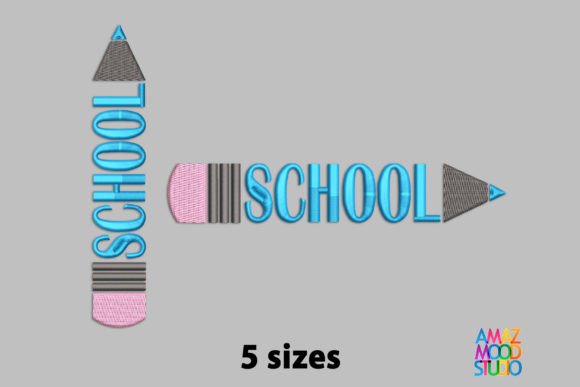
When I opened the School Pencil embroidery file, I didn’t see just another Back To School motif—I saw a design with quiet confidence. It’s not overly cutesy or cartoonish; instead, it balances clean lines with gentle personality—slightly tapered pencil body, subtle graphite tip, a tidy eraser, and just enough detail to read clearly at 3–4 inches tall. The layout feels intentional: compact enough for a pocket or cuff, yet open enough to avoid visual clutter on small items like baby onesies or tea towels. As a designer who regularly selects embroidery files for client projects, I immediately thought: this is one I’d confidently stitch on a custom tote bag for a teacher’s welcome kit—or embroider onto a linen apron for a school-themed boutique.
Where It Shines: Real Projects, Real Customers
I tested School Pencil across three real-world uses: a cotton twill tote bag for a local after-school program, a soft organic cotton sweatshirt for a homeschool co-op fundraiser, and a set of linen pillow covers for a nursery refresh. In each case, the design held up—not as decoration, but as *meaningful detail*. On the tote, it landed with quiet professionalism; on the sweatshirt, it softened the garment’s sporty edge without sacrificing legibility; on the pillow cover, it added warmth and intentionality. Customers noticed. A teacher paused mid-conversation to point at the tote and say, “That pencil? That’s exactly how I feel—sharpened, ready, slightly worn-in.” That kind of resonance matters—especially for Etsy sellers and small shop owners building trust through thoughtful handmade product choices.
Smart Fit for Commercial & Personal Use
- Custom apparel: Works beautifully on crewnecks, raglans, and lightweight tees—especially when paired with minimalist text (e.g., “My First Year” or “Pencil Sharpener”). Avoid overloading the chest area; School Pencil earns attention by being singular and well-placed.
- Embroidered patch: Clean edges and moderate stitch density make it ideal for iron-on or sew-on patches—great for backpacks, denim jackets, or classroom supply kits.
- Baby embroidery: Gentle scale and no fussy details mean it reads softly on onesies and burp cloths. Just confirm thread colors are OEKO-TEX® certified if selling commercially.
- Holiday embroidery: Surprisingly effective for end-of-year teacher gifts—stitch it on a kitchen towel alongside “Thanks for Helping Me Grow” in simple running stitch.
Where to Proceed Thoughtfully
School Pencil isn’t universally forgiving—and that’s honest design feedback, not a flaw. On textured fabrics like terry cloth or bouclé, the graphite tip and eraser details can blur unless you use a medium-weight cutaway stabilizer and reduce top tension slightly. On dark fabric, test contrast first: light gray or ecru thread may vanish unless you add a white underlay (check your machine embroidery design software for that option). And while it scales down well, don’t push it below 2 inches tall—tiny lettering isn’t part of this file, but fine line work (like the pencil’s groove or metal ferrule) starts losing clarity under 1.75 inches.
Curved surfaces—like caps or beanies—require extra prep. The shape is narrow enough to fit most front cap hoops, but the taper means the tip may lift slightly on high-crown hats unless you use adhesive + tear-away combo stabilizer. Also, avoid layering it over seams or darts without re-hooping and re-aligning—it’s precise enough that misalignment shows.
What It Adds Beyond Stitching
This isn’t just about thread count or hoop size. School Pencil elevates perception. On an Etsy listing, it signals care—no rushed clip art, no generic icon. For a craft fair booth, it helps your table stand out with cohesive, story-driven design assets. For a digital embroidery file seller, it’s a reliable anchor piece: versatile enough to bundle with “Back To School” collections, distinctive enough to avoid blending into the noise. And for gift buyers? It reads as personal—not mass-produced. That unspoken message—“I chose this *for you*”—is where handmade value lives.
Practical Designer Notes Before You Stitch
- Always test first: Run School Pencil on scrap fabric matching your final project’s weight and stretch.
- Check thread color contrast: Try black, navy, charcoal, and cream on both light and dark backgrounds—even subtle shifts change how “sharp” the pencil looks.
- Review stitch density: If your machine struggles with dense fill stitch areas, consider simplifying the eraser or graphite tip in editing software (if licensed for modification).
- Confirm hoop size: While compact, verify compatibility with your smallest hoop—some versions may include optional larger layouts.
- Inspect small details: Zoom in on the tip and ferrule in your embroidery software. Are corners crisp? Is there unnecessary jump stitching?
- Test mockups: Drop the design into printable mockups in black-and-white mode—this reveals balance and silhouette issues faster than color previews.
- Stabilizer matters: Lightweight woven cotton? Use tear-away. Knit or stretchy fabric? Go with cutaway + topping. Linen or slubbed texture? Add a light film topping for clean satin stitch definition.
- Licensing check: Since this is a machine embroidery design intended for commercial embroidery and finished product resale, confirm whether your license permits use in physical goods, digital embroidery file resale, or both.
In short: School Pencil is a grounded, adaptable embroidery file—not flashy, but quietly capable. It doesn’t shout. It invites closer looking. And in a market crowded with overdesigned, overscaled motifs, that restraint is its strongest asset. Whether you’re stitching for a client, prepping for craft fair season, or building a cohesive digital product line, this is one design that earns its place—not because it’s trendy, but because it works, thoughtfully, every time.