5th Grade Back to School Embroidery Design Review
There's a particular energy that comes with back-to-school season, and this 5th Grade Back to School design captures it in a way that feels both celebratory and genuinely useful for makers. When I first pulled it up for evaluation, I wasn't looking at it as just another seasonal file sitting in a digital folder—I was imagining it stitched out on a child's backpack, a classroom pillow cover, or a teacher appreciation gift that someone would actually keep. That's the lens I always use, because a design only matters if it works in the real world, on real fabric, for real people.
The mood here is playful without tipping into cartoonish territory. It's confident, age-appropriate for fifth graders who are starting to feel a little older but still light up at something made just for them. The theme reads clearly, and the layout feels balanced in a way that suggests it would hold its own on a variety of blank surfaces. I've seen plenty of school-themed machine embroidery design files that lean too heavily on clip-art energy, and this one sidesteps that trap nicely.
First Look at the Visual Personality
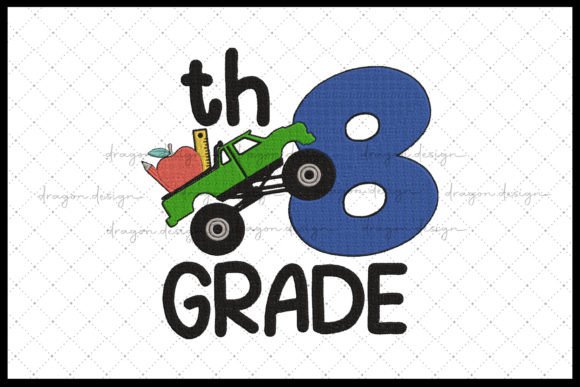
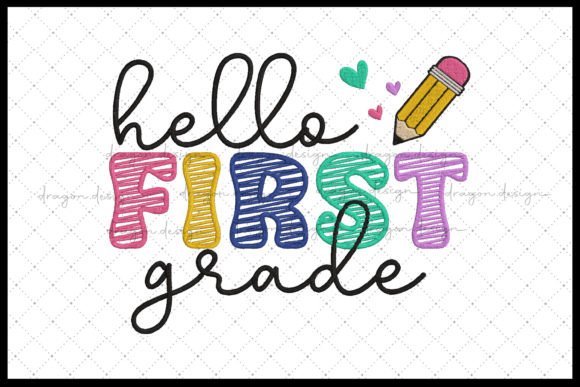
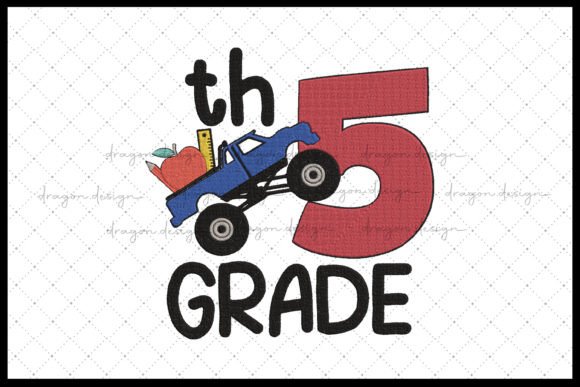
What strikes me immediately is how the lettering and any accompanying graphic elements work together. In many embroidery file options for this category, the text either dominates awkwardly or the decorative bits feel like an afterthought. Here, the composition feels intentional. If you're someone who runs a small shop and needs designs that photograph well for listings, this matters more than you might think. A balanced design photographs cleanly, shows up nicely in printable mockup previews, and gives potential buyers a clear sense of what they're getting.
I also look at how a design will read from a slight distance. On a tote bag hanging on a craft fair rack or a sweatshirt folded on a boutique table, the 5th Grade Back to School message needs to be legible without someone having to squint. Based on what I'm seeing, the sizing and detailing suggest good visibility, though I'd strongly recommend testing the stitch density on your specific fabric before committing to a full production run.
The Tote Bag That Started Everything
Let me ground this in something concrete. I recently worked with a client who runs a small personalized gift business, and she wanted a custom embroidered tote bag design for incoming fifth graders. The idea was to create something parents could order as a first-day-of-school surprise—practical enough to carry books but special enough that the child would feel celebrated. We tested a few back to school themed designs, and the 5th Grade Back to School file was the one she kept returning to.
On a medium-weight canvas tote, the design stitched out with crisp definition. The satin stitch areas held their shape without pulling, and the fill stitch sections provided solid coverage without making the fabric stiff. That last part is crucial because nobody wants a tote bag that feels like cardboard where the embroidery sits. After a wash test—cold cycle, inside out, air dried—the design maintained its integrity, which is exactly what you need when you're selling handmade product that real families will use.
This real-life scenario is what I keep circling back to. If you're an Etsy seller or craft business owner, you're not just buying a file. You're buying confidence that the finished item will arrive at a customer's door looking professional. This design delivers that confidence, provided you do your part with proper hooping and stabilization.
Where This Design Naturally Belongs
Some designs are versatile in theory but awkward in practice. The 5th Grade Back to School motif genuinely fits a range of useful products without feeling forced. Here's where I'd confidently use it:
- Custom apparel: Sweatshirts and t-shirts are the obvious starting point. A raglan sleeve sweatshirt with this design on the chest or across the back would be an easy bestseller during late summer.
- Tote bags: As I mentioned, this is a natural fit. The theme matches the utility, and parents love practical gifts that still feel personal.
- Pillow covers: A classroom reading pillow or a bedroom accent piece for a fifth grader's room makes a thoughtful personalized gift that outlasts the school year.
- Aprons: For the art class enthusiast or the kid who loves helping in the kitchen, an embroidered apron with this design adds a layer of ownership.
- Patches: If you create embroidered patch versions, this could be sewn onto jackets, backpacks, or pencil cases, which broadens your product lineup considerably.
- Tea towels: A kitchen towel with this design could work as a teacher gift, especially paired with a small bundle of school supplies.
What unites all of these is that the design doesn't overwhelm the product. It complements the surface while still being the focal point. When you're building inventory for a small shop or preparing for a craft fair season, designs with that kind of range help you do more with fewer files.
When Your Fabric Fights Back
I've learned the hard way that even the prettiest digital embroidery file can betray you on the wrong material. So let's talk about where you need to exercise caution with 5th Grade Back to School. If the design includes any smaller text or fine interior details—and most school-themed designs do—you'll want to avoid extremely textured fabrics like thick terry cloth or loosely woven linen, at least without significant testing first. The detail can get swallowed or distorted.
Stretchy fabrics demand extra attention here. On a thin jersey t-shirt, the design might pucker if your stabilizer choice isn't dialed in correctly. I always use a cutaway stabilizer for knits and test on a scrap of the actual garment fabric before stitching on the final piece. For dark fabric applications, you'll need to consider whether the design has enough contrast, especially if the file uses darker thread colors in certain areas. A quick black-and-white mockup test on screen can reveal contrast issues before you waste thread.
Curved surfaces like caps and hats present another challenge. If you're offering cap embroidery to customers, confirm that the hoop size your cap frame accommodates can handle the width of the design. Some machines max out at a narrower field than what a design like this might require for optimal legibility. I'd also avoid layering this on heavily constructed garments where seams, zippers, or bulky seams sit close to the embroidery area. Registration becomes a headache, and you risk broken needles or uneven stitching.
What Buyers Actually Notice
Here's something I think about constantly: your customer might not know anything about running stitch versus satin stitch, but they absolutely notice when embroidery looks polished. The 5th Grade Back to School design, when executed well, communicates care. It tells parents that someone put thought into their child's milestone. It tells gift-givers that this isn't a generic last-minute grab. That kind of customer trust compounds over time, especially if you're selling through an Etsy listing where reviews and repeat purchases drive visibility.
I also want to emphasize how a design like this affects brand consistency. If your shop specializes in personalized children's products, having a cohesive collection of grade-level designs creates a visual through-line that customers recognize. The fifth grade version should feel like part of a family, and based on the styling cues here, it likely does. When a buyer purchases the kindergarten version one year and comes back for the fifth grade file the next, that continuity matters.
Thread Choices and the Subtle Art of Color Testing
Don't underestimate how much thread colors can change the personality of this design. On a white sweatshirt, brighter thread pops with youthful energy. On a natural canvas tote, slightly muted tones can read as more sophisticated and adult-friendly, which matters if the item is also being marketed as a teacher gift. I always stitch out a small swatch on the exact fabric I plan to use, in the exact thread brand I stock, before listing the product. Different thread brands have slightly different sheens, and that subtle difference can affect how premium the finished piece looks.
If you're an apparel decorator or boutique owner who uses design assets across multiple product types, consider creating two versions of your listing photography: one on a light background and one on a darker surface. Even if you don't offer both fabric options initially, showing the design on contrasting backgrounds helps customers visualize it in their own context, which reduces hesitation and returns.
Notes from the Stitching Table
Every designer develops a mental checklist, and mine grows with every project. For 5th Grade Back to School, here's what I'd recommend before you stitch the first paying order:
- Scrap fabric first, always. Even if you've used the file before, a new fabric batch can behave differently. Test on an offcut from the same bolt or garment.
- Check thread color contrast. Look at the design under natural light and indoor lighting. What seems crisp on screen can blur in real life if tones are too similar to the fabric.
- Review stitch density. If the design feels overly dense on your fabric, you might need to adjust tension rather than the file itself. Dense stitching on lightweight fabric pulls and distorts.
- Confirm hoop size. Don't assume. Measure the design's actual stitchable area and match it to your available hoops, considering the seam allowances of the blank product.
- Inspect small details. Any tiny interior cutouts or fine lettering should be examined after the first test stitch. If something closes up or becomes illegible, you may need to adjust scaling—but only if the file supports resizing without distortion.
- Test in black and white. Convert a screenshot of the design to grayscale. If any elements disappear into a mid-tone gray, they might vanish on certain fabric colors.
- Use proper stabilizer. Woven fabrics generally do well with a medium-weight tearaway. Knits demand cutaway. Toweling or plush fabrics might need a water-soluble topper to prevent stitches from sinking.
- Verify licensing. Before selling finished items or offering the digital embroidery file as part of a bundle, confirm what the creator permits. Some designs are cleared for commercial embroidery use on physical products but restrict digital redistribution. This isn't something you want to guess about.
Selling This Design Without Overpromising
One of the quiet advantages of a straightforward design like 5th Grade Back to School is that it's easy to market honestly. You don't need to overstate what it is. Parents of fifth graders are already emotionally primed for this purchase. They're thinking about their child growing up, about capturing a moment before middle school looms on the horizon. Your job as the maker is simply to show them a beautifully stitched product that honors that feeling.
For craft fair products, consider displaying this on a neutral-colored sweatshirt folded neatly with a coordinating ribbon. For Etsy sellers, a lifestyle photo showing a child holding the embroidered tote or wearing the shirt in soft natural light will consistently outperform flat-lay shots alone. The design has inherent emotional resonance, and your photography should lean into that without becoming saccharine.
I've also seen makers pair grade-level embroidery with a child's name or initials on the same item, which increases the perceived value and allows for a higher price point. If the 5th Grade Back to School file leaves room for monogramming without crowding, that's a strong upsell opportunity worth exploring.
When a Design Earns Its Place in Your Rotation
Not every file deserves a permanent spot in your go-to library. The ones that do are those you can return to year after year, confident that they'll stitch cleanly, please customers, and hold up to washing and wear. Based on my evaluation, 5th Grade Back to School is one of those keepers. It serves a clear purpose, fits a defined customer need, and looks good across multiple product categories. For the creative entrepreneur building a seasonal collection or a hobbyist making a one-off gift, that combination is hard to beat.
The design won't do your job for you—no file does—but it provides a reliable foundation. Your stabilizer choices, thread matching, fabric preparation, and finishing techniques will determine whether the final product feels homemade or handmade. Those are two very different things, and your customers can tell the difference. Pair this design with careful craftsmanship, and you'll have something worth selling, gifting, and stitching again next season.