Japanese School Girl Embroidery Design: Business Review
As an embroidery designer who works daily with small business owners, I’m always scanning for machine embroidery design files that can pull double duty — cute enough for kids’ accessories but structured enough for real branded merchandise. The Japanese School Girl design immediately grabbed my attention because it sits right at that intersection. It’s a classic, cute, schoolgirl character in a Japanese-style uniform, and the product description promises multiple embroidery file formats. Before I add it to my client-facing collection, I want to walk through how this design performs when you’re thinking about patches, caps, aprons, tote bags, and everything in between. This isn’t just a decorative choice; it’s a small business asset, and every stitch has to earn its place.
First Impression and Visual Personality
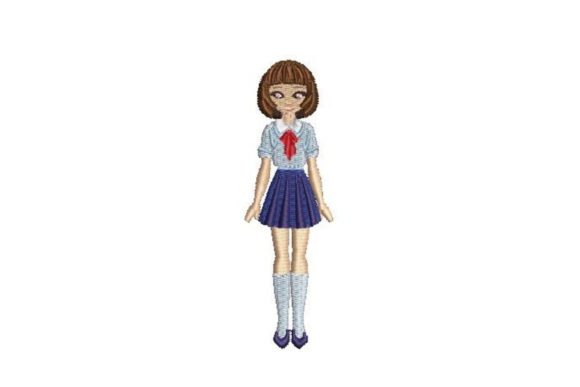
Right away, Japanese School Girl lands somewhere between playful and nostalgic. The uniform detail — likely a sailor-style collar, maybe a ribbon, a pleated skirt — gives it that instantly recognizable “kawaii” vibe. For a brand, this is a specific kind of signal. It doesn’t feel corporate, industrial, or rugged. It reads as friendly, handcrafted, and a little bit whimsical. If your small business leans into handmade products, boutique aesthetics, or creative studio energy, this design can feel like a natural extension of your voice. It’s decorative without being childish, assuming the final digitized version keeps the proportions clean and the facial features simple.
However, cute can be a double-edged sword. What looks charming on a kid’s backpack might feel out of place on a high-end coffee shop apron. I always tell brands to test the emotional temperature of their design assets. Japanese School Girl will suit bakeries, florists, pet brands, craft supply stores, stationery shops, or any business that wants to inject a bit of approachable character into their merch. It’s less likely to work for law firms or industrial suppliers — but you already knew that.
Embroidered Patches and Small Brand Marks
Patches are one of the strongest use cases for Japanese School Girl. Because the design likely centers on a single character with a clear silhouette, it can be isolated easily as an embroidered patch. I can see it stitched onto denim jackets, canvas pouches, or even the chest pocket of a work shirt. The key is to test the stitch density and outline at reduced sizes. A typical 3-inch patch will hold detail well, but pushing it down to 2 inches or smaller might lose the facial features and uniform folds. Before ordering a batch, I’d run one sample at the intended patch size and check if the thread colors stay distinct. Nothing says “unprofessional” like a muddy patch where the collar and ribbon blend into one blob.
Cap Embroidery and Curved Surfaces
Caps are notorious for distorting designs. The front panel curve can warp long horizontal elements. Japanese School Girl, with its vertical orientation (character standing upright), might actually work better than many text-based logos. I’d position it on the side panel or front center, keeping the character’s height proportional to the cap structure. If your brand wants a cap that feels like limited-edition streetwear or a fun team accessory, this design adds personality without screaming the business name. Just be cautious with small details like the eyes or ribbon ties — on textured fabric, those can become illegible. A smooth twill cap front is a safer canvas than a puffy unstructured cap.
Apron Embroidery for Shops and Studios
For a bakery, café, or florist, the apron is prime real estate. Japanese School Girl placed on a bib apron chest creates an instant talking point. I’d use it as a subtle brand accent rather than the main logo. Think of it paired with your shop name beneath — suddenly you have a uniform that feels custom and handcrafted. The design’s school theme even ties in nicely with a “fresh from the oven” or “house-made” feel. On dark aprons, contrast is vital. A white or pastel thread set might pop beautifully on black cotton, but test for bleed-through and ensure the stabilizer can handle the stitch count. Aprons get washed frequently, so thread quality and density matter. A design with too many overlapping stitches in the skirt or hair could stiffen the fabric and eventually crack.
Tote Bags, Pouch Merch, and Product Accents
This is where Japanese School Girl can become a scalable merchandise product. A simple canvas tote bag with the character stitched in the corner feels like a limited-run artist collaboration. For a small business that sells handmade soaps, candles, or jewelry, an embroidered pouch with this design could become a signature packaging element. Customers re-use those pouches, and that’s free brand advertising. The trick is to ensure the design file stitches cleanly on the thicker seams or heavy canvas often used for bags. I’d run a test on the actual fabric weight and adjust pull compensation accordingly. A distorted skirt seam can ruin the cuteness factor instantly.
Where You Need to Be Careful
Despite its charm, Japanese School Girl isn’t a one-size-fits-all solution. I see several areas where small business owners should pause and test:
- Small patch sizes: If your brand identity requires a 1.5-inch patch, this design might collapse into an unrecognizable shape. The uniform details and facial features need breathing room. I’d set a hard minimum at 2.5 inches for any commercial embroidery that will be seen up close.
- Curved surfaces: While caps can work, water bottle wraps or cylindrical surfaces might warp the character’s vertical alignment. Always test on a curved substrate before committing to a bulk order.
- Tiny lettering or additional text: If you plan to add your business name beside the character, the combined design must be digitized as one file with careful spacing. Otherwise, the registration can shift, and your cute schoolgirl ends up looking disconnected.
- Dark uniforms and textured fabrics: On a dark polo shirt or textured fleece, light thread colors can show puckering or fabric show-through. Increase underlay and choose a stabilizer that matches the fabric weight. A topper might be necessary on plush fabrics.
- High stitch density areas: If the skirt or hair uses dense fill, the finished product could feel stiff. This matters for garments worn against the skin. For patches, stiffness isn’t an issue, but for a T-shirt chest print, you might want a less dense version or consider a digitizer who can reduce the stitch count without losing definition.
How Japanese School Girl Influences Brand Identity
When a small business chooses a character-based embroidery design like Japanese School Girl, they’re making a deliberate personality statement. It’s a soft, friendly, and culturally specific icon. That can build strong customer trust if it aligns with your brand story. For instance, a craft studio selling Japanese-inspired stationery will find the design reinforces their visual consistency. A bakery that names its pastries after anime characters will see the design as an extension of that theme. Used consistently across staff uniforms, tote bags, and packaging, this single embroidery file becomes a recognizable visual anchor.
Recognition builds over time. When your customers see that same schoolgirl on a cap at a farmer’s market and then on a pouch in their friend’s bag, the design becomes a quiet but powerful part of your business identity. It doesn’t need to shout; it just needs to appear reliably and look professionally stitched. That’s why I always advise small business owners to invest in a high-quality digitized file and not just the cheapest auto-converted option. A poorly digitized Japanese School Girl with uneven satin stitches or jagged outlines will undermine the handmade presentation you’re trying to achieve.
Practical Designer Notes Before Stitching
I’ve learned through plenty of ruined garments that rushing into production with a new digital embroidery file is a mistake. Here’s the sequence I’d follow with this design:
- Check the file formats included. The description says multiple embroidery file formats are provided, but I need to confirm which machine family my equipment uses. Without that, I can’t even open the file.
- Review in black and white first. I always preview a design without color. If the composition still reads clearly in grayscale, it will hold up well on various thread color combinations. Japanese School Girl relies on uniform details, so the collar shape and skirt lines must be distinct even before color is applied.
- Test at small patch size. Stitch one sample at the smallest size you intend to use. Evaluate it at arm’s length. If the face becomes a shapeless dot, scale up or accept that this design needs a larger footprint.
- Inspect thread color contrast. The school uniform likely uses navy, white, and red tones, but you might want to adapt colors to your brand palette. Make sure the skin tone thread doesn’t blend into the background fabric, and that the ribbon stands out from the collar.
- Select the right hoop and stabilizer. For a patch, I’d use a heavy cutaway on canvas or twill. For an apron, a tear-away might work, but I’d add a fusible backing for extra support. For caps, use cap-specific hooping and a firm stabilizer.
- Run a fabric test on your actual merchandise blank. Don’t assume a design that stitches well on cotton will look the same on a polyester work shirt. Test, wash, dry, and inspect. Check for thread breaks, distortion, and colorfastness.
- Create a printable mockup for client approval. Whether you’re the business owner or you’re selling the service, a digital mockup on the actual product photo prevents misunderstandings. Show the size, placement, and thread colors clearly.
- Double-check licensing for commercial use. This is critical. Confirm that the embroidery file permits commercial embroidery on items you sell. If it’s for personal use only, you can’t legally slap it on branded merchandise. Don’t skip this step — it protects your entire product line.
Is Japanese School Girl Right for Your Small Business Merch?
If your brand voice is playful, nostalgic, or inspired by Japanese pop culture, then Japanese School Girl can be a smart addition to your design assets. It fits naturally into a Back To School themed collection, but it’s not limited to that season. For an Etsy seller offering personalized pouches, a handmade product line that uses this embroidery can tap into the kawaii market. For a boutique that wants a memorable staff apron, this design offers a unique alternative to generic initials or logos.
At the same time, I’d caution against using it as your sole brand identifier unless your entire business concept revolves around that exact character. It works best as a complementary mark — something that adds texture to your brand identity without replacing your main logo. Pair it with a clean wordmark on a tote bag, and you have a cohesive finished product that feels thoughtfully designed.
The commercial embroidery potential is definitely there, but success depends entirely on how you prep the file, select the materials, and test the output. I’ve seen too many well-intentioned designs fail in production because someone skipped the sample step. Don’t let that happen with this cute schoolgirl. Treat her like any other professional design asset, and she’ll deliver a polished result that elevates your small business merch.
Before you click buy, get the specifics: confirm hoop size requirements, available file format list, stitch count range, and any trimming instructions. If the seller offers a stitch-out photo or video, study it carefully. That visual is worth more than any description. With a little diligence, Japanese School Girl can transform from a simple embroidery file into a signature detail that sets your products apart — one careful stitch at a time.