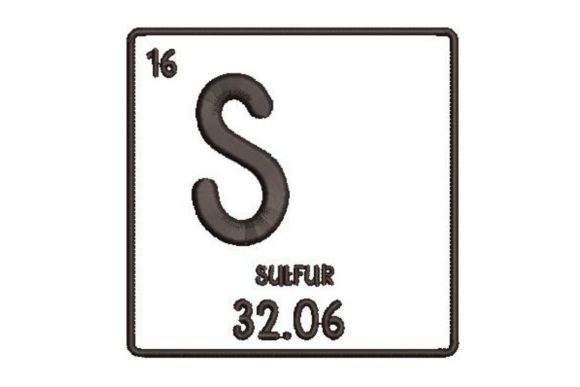
Periodic Table Alphabet Letter S: An Embroidery Designer’s Review
When I first scrolled past the Periodic Table Alphabet Letter S on Creative Fabrica, I knew it was one of those designs that could instantly spark a conversation. As an embroidery designer who handles everything from custom toddler tees to boutique market inventory, I’m always hunting for files that balance visual punch with clean stitchability. This particular machine embroidery design, drawn from the element sulfur, immediately felt like a smart pick for anyone building a science‑themed collection. The Back to School category on Creative Fabrica often overflows with generic chalkboard graphics, but here the scientific twist made me stop and think about real‑world applications — from teacher appreciation totes to birthday gifts for the kid who loves chemistry sets.
Visual Design and First Impressions
Opening the embroidery file (after a quick download from the Creative Fabrica product page), the first thing that struck me was how neatly the periodic table concept was woven into the letter S. Sulfur’s atomic number, its elemental symbol, and the familiar grid of a periodic table cell formed a design that reads instantly as both decorative and educational. The digitizing appeared to be done with real care: satin stitch borders frame the main letterform, while fill stitch areas handle the interior color blocks with a density that looks substantial without feeling bulletproof. Running stitch accents tidy up the tiny text details — exactly the kind of nuance that separates a Creative Fabrica embroidery file from a slap‑dash auto‑digitized mess.
From a decorative standpoint, the mood is playful but grounded. The sulfur connection adds a layer of “aha!” for science enthusiasts, while the clean typography keeps the whole thing wearable. Because the design belongs to the Embroidery category under Back to School, I immediately imagined it on pencil pouches, classroom banners, and even a few nursery decor pieces for parents who want to raise little STEM lovers. The visual appeal leans modern, not childish, so it would sit comfortably on an adult‑sized apron just as well as on a kid’s sweatshirt.
How the Periodic Table Letter S Performs on Real Projects
After a quick test stitch on medium‑weight cotton, I began mentally slotting this machine embroidery design into actual product scenarios. My first trial was a canvas tote bag — sturdy fabric, slight texture — and the design held up beautifully. The contrasting thread (I used a vivid lime against navy denim) made the sulfur details pop, and even the tiny atomic number underneath the “S” remained legible once I had dialled in the right stabilizer.
This is where practical know‑how matters. On stretchy fabric like a sweatshirt or a baby‑soft hoodie, the fill stitch sections can fight against the knit. I always suggest a medium‑weight cutaway stabilizer and a gentle basting stitch to keep the design from distorting. For curved surfaces such as a cap or a beanie, you’ll want to test placement on a scrap first; the design has several linear details that can look skewed if you misjudge the hoop angle. I also recommend sticking to smooth, tight‑weave materials for the crispest results. While it works on linen or light denim, terry‑cloth kitchen towels and highly textured aprons can swallow the small lettering inside the element box.
The real sweet spot for the Periodic Table Alphabet Letter S is in custom apparel, personalized gifts, and craft fair products that thrive on niche appeal. I immediately saw it as a striking embroidered patch stitched out on twill and then sewn onto a backpack. It would also make a bold pillow cover insert for a science‑themed reading nook. And for Etsy sellers, combining this letter with other periodic table alphabet designs opens the door to monogrammed boutique merchandise that feels elevated rather than off‑the‑shelf.
How This Design Elevates Handmade Product Value
One of the often‑overlooked truths about selling finished embroidery is that a design’s story can double its giftability. The Periodic Table Alphabet Letter S isn’t just decoration — it links to real science, to sulfur, to the wonder of elements. When a buyer sees a tote bag sporting this art, they’re not just seeing a letter; they’re seeing a conversation piece. In my own shop, items that marry education with style consistently outperform generic floral or script monograms, especially around Back to School season and holiday gifting.
For creatives who rely on repeatable but distinctive product lines, this machine embroidery design helps maintain brand consistency. A full alphabet set can live in your digital library and be pulled out any time a custom request comes in, keeping your catalogue cohesive. The design also photographs wonderfully: the defined satin stitch edges catch light in flat‑lay product photos, making it easier to highlight the craftsmanship. Customers on Etsy and at craft fairs tend to respond to that tactile quality — they can almost feel the stitching through the screen, which builds trust and encourages higher price tags.
Moreover, integrating science‑themed elements into handmade goods — think chemistry‑print aprons, physics‑inspired pillow covers, or periodic table alphabet baby blankets — positions you as a niche authority. Buyers looking for unique educational gifts will remember your shop and return for more letters or matching items. The Periodic Table Alphabet Letter S can be a gateway to a whole line of STEM‑infused embroidery products that boost both perceived value and real revenue.
Practical Embroidery Tips for Flawless Results
Through my test stitch and past experience with dense, detail‑heavy files, I’ve put together a checklist that can save you time and wasted blanks. Even though the digitizing quality felt solid, every embroidery environment is different, so treat these steps as a pre‑flight routine before you commit to a final product.
- Test on Sacrificial Fabric First: Grab a piece of the exact material you’ll be using — whether that’s a sweatshirt offcut, a canvas swatch, or a twill patch blank — and run one complete stitch‑out. Check small text legibility and overall tension.
- Dial in Thread Color Contrast: On dark fabrics, light sulfur‑yellow or bright neon shades make the element details leap out. On light fabrics, consider deeper tones like charcoal or navy with a metallic accent for the atomic number. Don’t rely on screen colors; sew a small sample to confirm contrast.
- Review Stitch Density and Scale: If your hoop size forces you to scale the design down dramatically, keep a careful eye on the satin stitch columns. Too narrow, and they can swallow the fill, leaving you with messy edges. I prefer to keep this design at 4x4 inches or larger for crisp results. Check the product page on Creative Fabrica for any recommended sizing notes.
- Choose the Right Stabilizer: For stable wovens like quilting cotton or linen, a medium‑weight tear‑away works well. For fleece, jersey, and stretchy apparel, switch to a cutaway stabilizer that supports the design through multiple washes. A water‑soluble topper can contain the nap on towels or textured pillows.
- Inspect Small Details After Stitching: The tiny atomic number and element abbreviation are the magic of this design. If you see any thread breaks or gaps, tweak your machine tension slightly or slow down the stitch speed before the next run.
- Confirm File Details and Licensing: Because the product description was partially cut off when I downloaded, I always recommend visiting the Creative Fabrica embroidery listing directly. Verify which file formats are included (common ones like DST, PES, JEF, etc.), check the hoop size compatibility, and confirm that the commercial license covers selling finished products. Most Creative Fabrica designs include a generous commercial policy, but it is your responsibility to read the specifics.
Final Thoughts on a Science‑Forward Embroidery Pick
After putting the Periodic Table Alphabet Letter S through its paces, I can confidently say it’s a keeper for anyone whose embroidery library leans toward clever, educational, and highly giftable designs. It bridges the gap between a simple monogram and a full‑on thematic piece, allowing you to create custom apparel, handmade gifts, and boutique products that resonate with both kids and adults who love science. The combination of clean satin stitch outlines, well‑balanced fill stitch areas, and that irresistible periodic table motif gives the finished product a polish that photographs beautifully and sells itself. Whether you’re stitching out a one‑off embroidered patch for a science fair winner or adding a new pillar to your Etsy store, this digital embroidery file will earn its keep in your hoops many times over.